Your guide to Energy Performance Certificates
What is an EPC rating and what is its purpose?
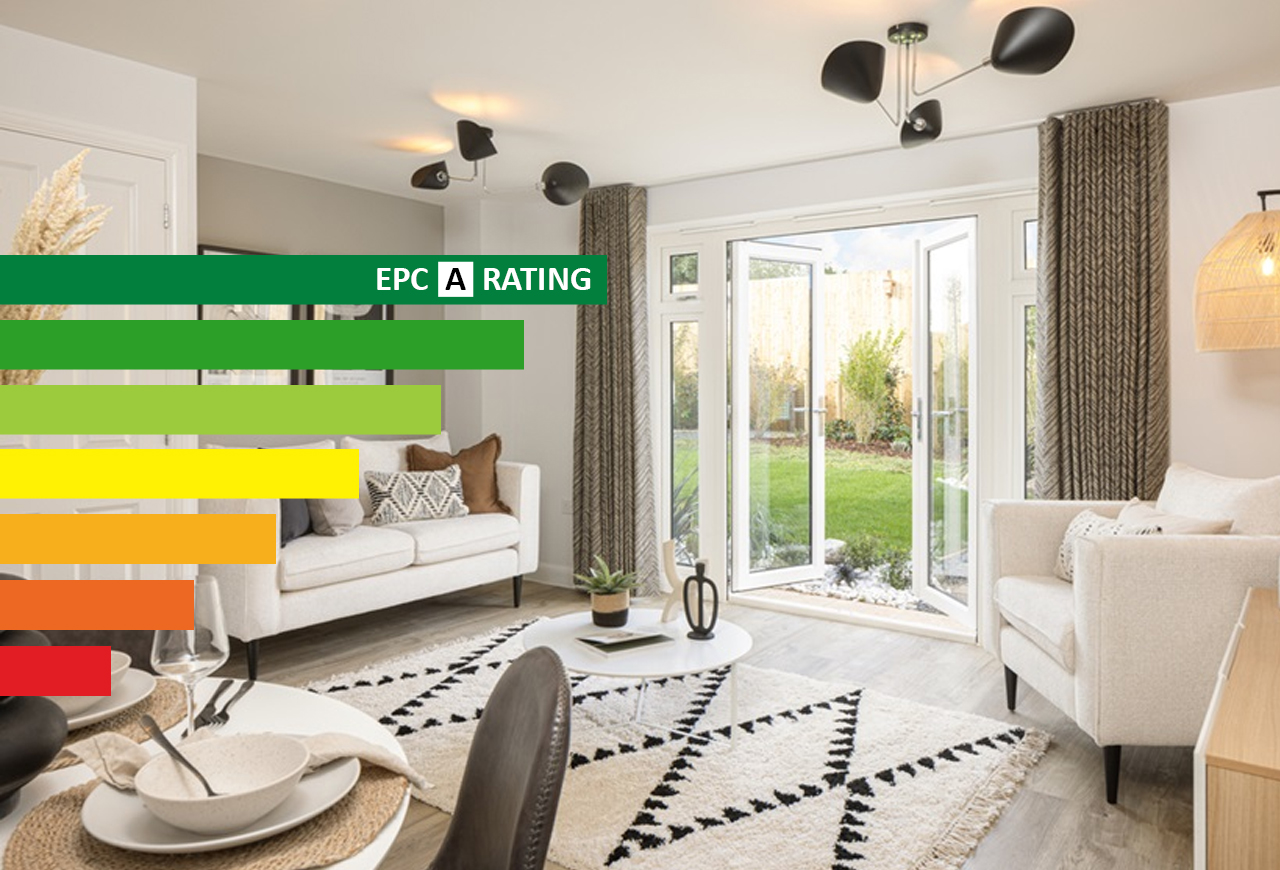
An EPC rates how energy-efficient a property is on a scale from A (most efficient) to G (least efficient). An EPC shows how much energy the property uses and suggests ways to make it more energy efficient, which can help you save money and lower your carbon footprint.

Why EPCs matter when buying a home

When buying a home, an EPC can reveal how energy efficient a property is. The higher the EPC rating, the more energy efficient the property is. A property with an EPC rating of A or B can cost significantly less to run than one rated D or below.
EPCs may also highlight potential improvements you can make to the property, helping you budget for upgrades alongside the other costs of buying a new home. New-build homes often have better EPC ratings thanks to improved compliance with the latest building regulations and standards.
How long is an EPC valid for?
Your EPC lasts for 10 years from the date it is issued, so there's no rush to get a new one if the home you're buying already has a valid certificate.
However, if you make significant improvements such as adding insulation or installing solar panels, it may be worth getting a new assessment. Better Energy Performance Certificate ratings may increase your home's value if you decide to sell in the future.

How much does an EPC cost?
What is an EPC survey?
Do you need an EPC when buying or selling a property?
You'll need an EPC if you're buying or selling a home in the UK. Sellers are legally required to provide Energy Performance Certificate ratings as soon as their property is listed for sale or rent. If you're buying, an EPC shows you how energy efficient the property is, which can indicate how much you're likely to spend on utilities.
It's important to compare EPCs when viewing different homes, as a more energy-efficient property could save you money in the long term. If you're purchasing a new-build home with us, we'll provide you with the EPC at no additional cost.
How do I get or find an EPC?
Requesting an EPC as a buyer
If you're a buyer, you don't need to arrange the EPC yourself. Just request a copy directly from the seller or their estate agent. A seller must legally provide an EPC, but you can also search for existing EPCs on GOV.UK, or the Scottish EPC Register if you're in Scotland.
Arranging an EPC as a seller
If you're selling a property, you'll need to get an EPC with a qualified assessor before putting your home on the market. In England, Wales and Northern Ireland, this must be done by an accredited Domestic Energy Assessor. In Scotland, an assessor must be approved by the Scottish Government. The Scottish EPC Register has a list of approved assessors.
Once you've booked an assessor, they'll visit your home to do the survey and prepare the EPC.

What's in an EPC?
EPCs can look different depending on when and where they were issued, but they generally contain the same key information.
Energy efficiency rating
This section shows a property's energy efficiency rating on a scale from A (highest) to G (lowest). The higher the rating, the more energy efficient the home is.
Estimated energy costs
This part of the report gives an estimate of the property's annual energy costs. The figures cover heating, hot water and lighting, but don't include additional energy use from appliances such as refrigerators, cookers or washing machines.
Energy performance summary
Here, you'll see a breakdown of how energy efficient different parts of a property are. This includes walls, windows and the main heating system. Each feature is given a simple rating, ranging from very good to very poor, so you can see what's working well and where there may be opportunities to improve.
Recommendations and potential rating
The recommendations section is particularly important because it includes tailored suggestions to help you save energy. These might involve upgrading insulation, fitting low-energy lighting or replacing your boiler. Each recommendation includes estimated costs and the potential annual savings.
Environmental impact
Your property also receives an environmental impact rating based on its annual carbon dioxide emissions. It follows the same A to G scale as the energy efficiency rating. You'll see how your property compares to the average household and how much you could potentially reduce emissions.
What EPC ratings mean for your home
Energy Performance Certificate ratings provide valuable insight into a property's energy efficiency. On an EPC, you'll find two charts showing rating bands from A to G, one for the current rating and one for the potential rating, which estimates how much the home's efficiency could improve with recommended upgrades.
EPC band A to G breakdown
Energy Performance Certificate ratings are based on the government's Standard Assessment Procedure (SAP), which scores properties on a scale of 1 to 100. Here's what each band means:
-
A (92-100 SAP points): Most efficient, with very low energy costs
-
B (81-91 SAP points): Very efficient, with low bills
-
C (69-80 SAP points): Good efficiency and manageable running costs
-
D (55-68 SAP points): Average efficiency (most UK homes fall into this category)
-
E (39-54 SAP points): Below average; expect higher energy costs
-
F (21-38 SAP points): Poor efficiency with higher bills
-
G (1-20 SAP points): Least efficient, with very high running costs
Average ratings and what’s considered ‘good’
According to the Home Builders Federation report, 87% of new builds have an A or B rating. This means that they have excellent energy efficiency. EPC ratings of C are considered good for older properties that have been modernised, but most UK homes currently rate D or E. Lower ratings indicate average energy efficiency with room for improvement.2
Our new-build homes are designed to achieve A or B ratings, which can mean lower energy costs right from the start.

Tips to improve your EPC rating
Want to boost your home's energy efficiency? The good news is that even small changes can make a real difference to your EPC rating and your running costs.
Your EPC is your starting point. Follow the specific recommendations for your property, as every home is different. However, the improvements below cover some of the most common EPC recommendations.
Start with insulation
Good insulation makes an energy-efficient home. It's one of the most effective upgrades you can make.
Some of the most common areas to focus on include the loft, walls and floors:
-
Loft insulation. Aim for at least 270mm of insulation. If it's thinner or uneven, topping it up is usually straightforward and can make a noticeable difference
-
Wall insulation. Many homes built after the 1920s have cavity walls (two layers of brick with a gap in between). Filling this gap with insulation is often one of the most cost-effective upgrades. If your home has solid walls, internal or external insulation may be more expensive, but can deliver strong results
-
Floor insulation. If your home has suspended timber floors (where floorboards sit above a space or void), adding insulation underneath can reduce heat loss and improve comfort
Upgrade your windows
Single-glazed windows can impact your home’s ability to keep warm. Instead, opting for double or triple glazing can help reduce heat loss and prevent chilly draughts and cold spots.
Consider solar panels
Solar panels are a smart, long-term investment. They can boost your EPC rating and help reduce your energy bills by generating your own electricity. Instead of relying entirely on power from your supplier, you'll be using electricity generated by the panels. If your panels generate more electricity than you need, you can often sell it back to the grid.
Switch to LED lighting
Swap your existing bulbs for LEDs to save energy. LEDs use up to 80% less energy than halogen lights and can last longer, so you'll save on both energy bills and replacement costs. It's a small change that adds up over time.
Upgrade your heating system
An efficient boiler and smart heating controls can significantly improve your EPC rating. If your boiler is over 15 years old, replacing it with a modern model could reduce your heating costs by hundreds of pounds each year. Adding smart heating controls, like timers and radiator valves, gives you more control over when and where you heat your home.
Draught-proof your home
Sealing gaps around windows, doors and other openings is one of the most affordable ways to improve energy efficiency. Simple measures, such as fitting draught strips, filling gaps with expanding foam or adding keyhole covers, can make your home more comfortable and reduce heat loss.
Read our guide on saving energy for more ways to lower your bills and carbon footprint.
EPC cost vs potential savings
Whether big or small, EPC improvements require investment, but it’s worth considering the long-term savings.
Low-cost improvements (under £500)
-
LED lighting upgrades
-
Basic draught-proofing
-
Loft insulation top-up
Medium-cost improvements (£500-£5,000)
-
Cavity wall insulation
-
Boiler upgrades
-
Double glazing
Higher-cost improvements (£5,000+)
-
Solar panel installation
-
Solid wall insulation
-
Heat pump systems
Improvements not only reduce your energy bills but can also increase your property value, making them worthwhile investments whether you're staying put or planning to sell.
Explore our brand-new homes across the UK. Whether you’re a first time buyer or existing homeowner, we have a wide range of offers to help you make your next move.
EPC FAQs
-
The EPC assessment takes 45 minutes to 1 hour for most homes, depending on your property's size and layout.
-
An EPC is valid for 10 years from the date of issue.
-
A rating of C or above is considered good. Most UK homes currently have a D rating, so achieving anything higher means you're above the average. Our new build homes typically achieve A or B ratings thanks to modern construction methods.
-
An EPC assessment examines your property's key energy efficiency features, including insulation levels, heating systems, lighting, windows and doors, as well as any renewable energy features, such as solar panels.
-
Yes, all properties need an EPC when sold or rented. However, if you're buying a new build home from us, we'll provide the EPC as part of your purchase, so you won't need to arrange or pay for it separately.Ready to find your energy-efficient home? Explore our range of new build homes across the UK, designed with modern, energy-efficient features to help keep your bills low from day one.Call or visit our Sales Advisers to kickstart your homebuying journey today.
Our Offers to Help Get You Moving
Help to Sell
If you’re looking to start your next adventure, but are worried about the hassle of moving, we have a range of schemes available to help you sell your existing home.
Part Exchange
We could be your guaranteed buyer, so no stress or fuss, just an easy move for you and your family.
Low Deposit Offers
If you have a low deposit, we have a variety of schemes available to help make moving more affordable.
Own New - Rate Reducer
Own New - Rate Reducer is a brand-new scheme available on new build homes that could mean lower mortgage rates and reduced monthly payments.
Movemaker
We could help you arrange to sell your existing home, so you'll have no estate agent fees to pay.