
For many young people across the UK, saving for a home deposit is an important financial goal, with Gen Z finding new ways to build their savings and take steps towards getting on the housing ladder.
To find out how Gen Z Brits are building their deposits, we surveyed 526 people aged between 18 and 29, about the methods they are using to save for a house deposit.
How much are Gen Z putting away each month for a deposit?
We wanted to find out how much Gen Z are typically able to put aside each month towards a house deposit, and how they are working towards reaching their savings goals.
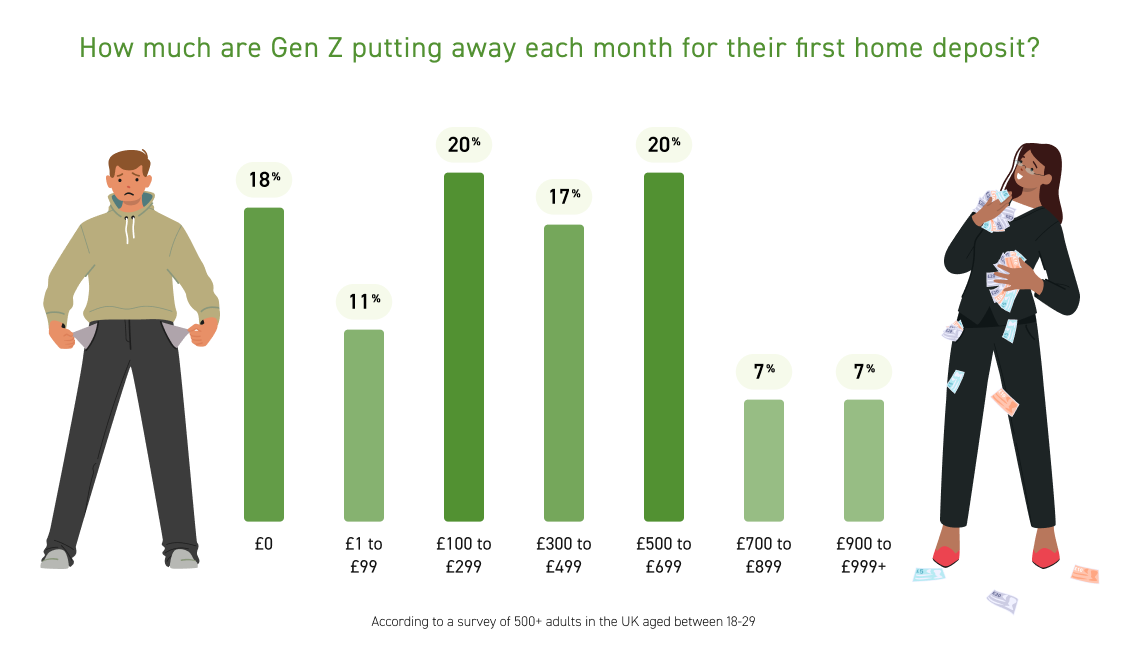
Our survey found that almost one in five Gen Z respondents (18%) are not currently putting any money aside towards a house deposit each month.
Among those who are saving, one in five (20%) say they put away between £100 and £299 each month, while a further 20% are setting aside between £500 and £699.
Overall, the average amount Gen Z respondents are saving towards a deposit, including those saving nothing, is £340 per month, although the wide variation in savings highlights the differing financial circumstances young people find themselves in.
How long does it take to save a house deposit?
Saving for a deposit varies greatly depending on how you choose to save your money, as there are lots of different types of savings accounts and schemes available to use.
To help give an idea of what’s achievable, we have broken down some examples of how much can be saved depending on monthly savings.
|
Target Deposit |
Property Price |
Monthly Saving |
Months to Target |
|
£12,500 (5%) |
£250,000 |
£200 |
5.25 years |
|
£12,500 (5%) |
£250,000 |
£400 |
2.7 years |
|
£12,500 (5%) |
£250,000 |
£600 |
1.75 years |
|
£30,000 (10%) |
£300,000 |
£200 |
12.5 years |
|
£30,000 (10%) |
£300,000 |
£400 |
6.25 years |
|
£30,000 (10%) |
£300,000 |
£600 |
4.2 years |
The example above demonstrates the importance of adding to your savings regularly, as however small the contributions may be, they all add up, make a difference and can speed up your journey towards building a deposit.
As young people build up their careers, many will benefit from pay rises and promotions. However, higher earnings can often lead to "lifestyle creep" where spending gradually increases alongside income, making it more difficult to build up savings.
While it's an easy habit to fall into, keeping spending in check can make a significant difference to how quickly you reach your homeownership goals. Adrian MacDiarmid, Head of Mortgage Lender Relations at Barratt Homes shares his advice on avoiding lifestyle creep and staying on track with your savings.
“Getting a promotion or pay rise is a great feeling and can be a really good way of increasing the amount you can put towards a house deposit. While it may be tempting to increase the amount you spend on other areas of your life, it can be a good idea to set aside an amount to put into your savings account each month, helping to prevent lifestyle creep.”
At what age do Gen-Z realistically expect to buy their first home?
With continuing economic uncertainty, we asked Gen Zs when they thought they would be able to get on the housing ladder.
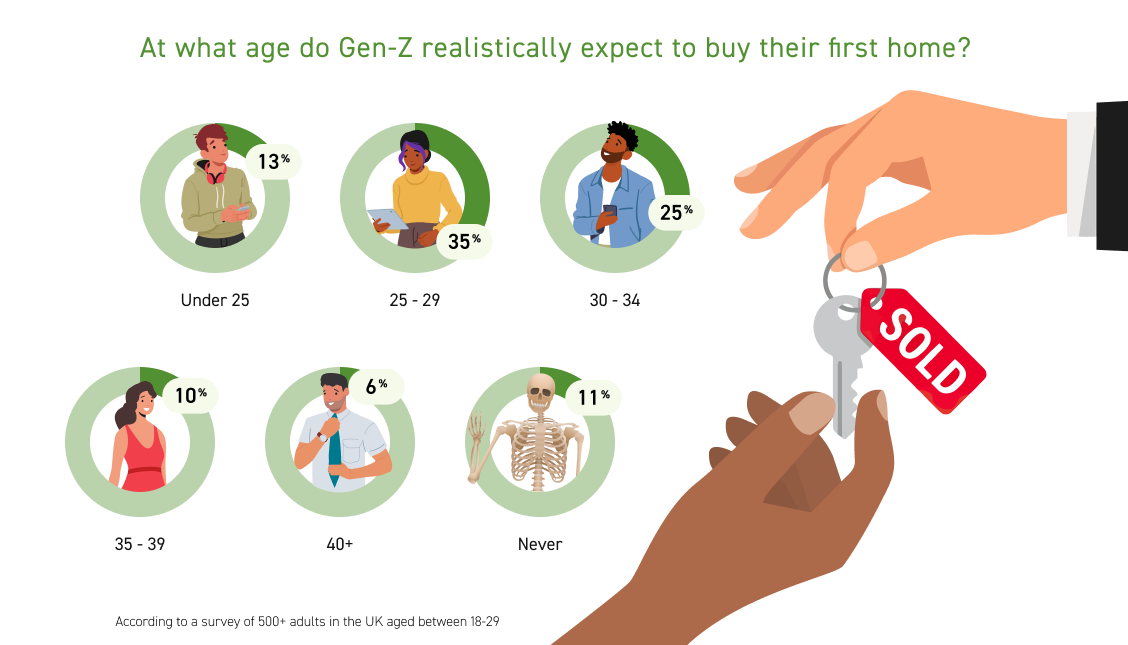
The results showed optimism among Gen Zs, with 48% believing that they will be able to get their first home before the age of 30. A further 25% reckon that they will be making their first home purchase between 30 and 34.
On the flip side, 11% of Gen Zs said that they don’t expect to be able to buy a house in their lifetime.
Nationally the average age for a first-time buyer has now climbed to 34, so for those looking to get on the ladder early, it is important to start saving early and continue to be consistent.
What methods are Gen Z using to build housing deposits?
Alongside finding out how much Gen Z can save each month, we wanted to explore the different methods they are using to build a house deposit.
From side hustles and selling unwanted items online to cutting back on everyday spending and making other lifestyle changes, we wanted to understand the most common ways young people are working towards home ownership.
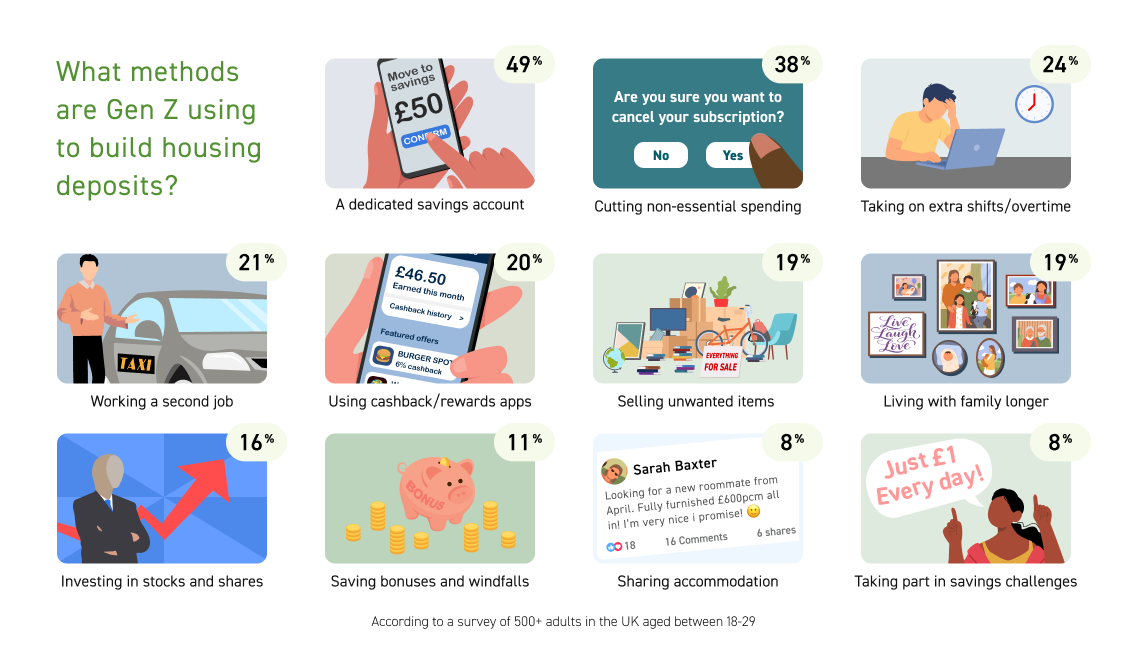
The most common method Gen Z are using to save for a house deposit is putting money into a dedicated savings account. However, it is surprising that fewer than half (49%) say they are doing so.
As Adrian explains, a dedicated savings account can be an effective way to make your money work harder through interest:
“It is surprising to see that less than half of Gen Z are using dedicated savings accounts to put money aside for a housing deposit. It’s important to make your money work for you, so even opening an easy-access savings account can help to boost your deposit through interest. For those looking for a bigger boost, a Lifetime ISA can be a particularly useful tool for first-time buyers, as the government will contribute a 25% bonus to your savings.”
Our survey also suggests that many Gen Z buyers are finding additional sources of income to boost their savings, highlighting the challenges of building a deposit through a single salary alone.
Almost a quarter (24%) say they take on extra shifts at work, while 21% have a side hustle or second job.
Meanwhile, 19% say they are still living with their parents as a way of reducing their outgoings and saving more towards a deposit.
Are Gen Z aware of all their savings options?
With such a range of deposit-saving options out there, we wanted to find out whether Gen Z understand some of the lesser-known schemes and methods for building a deposit.
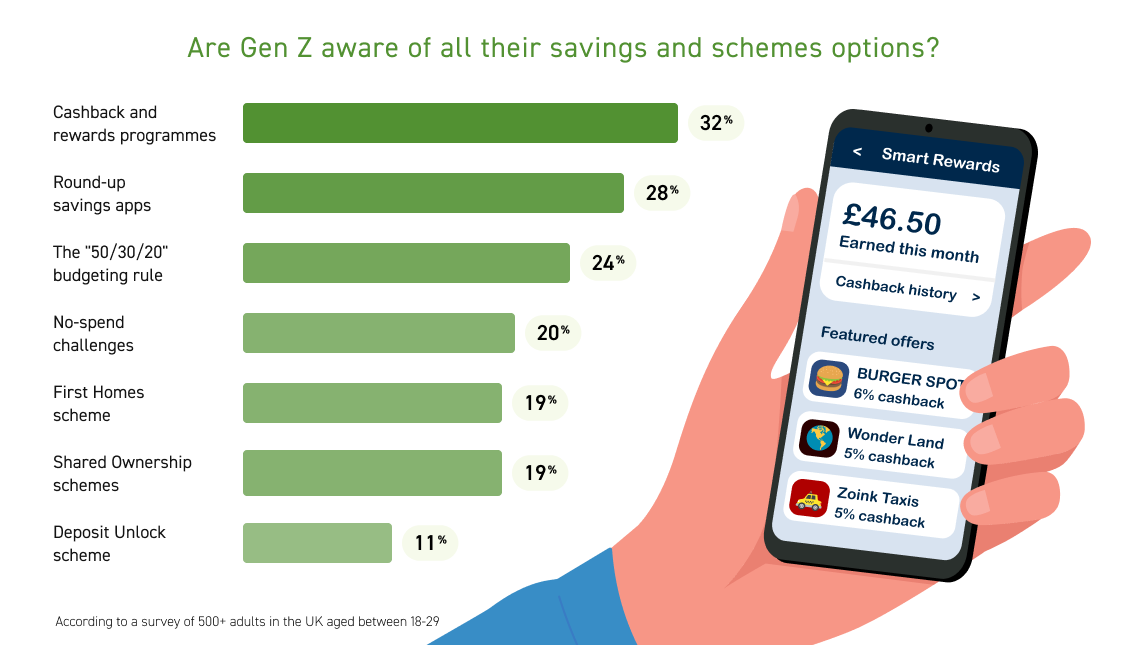
The survey also found that awareness of home buying support schemes remains relatively low among Gen Z. Just 19% say they are familiar with the First Homes and Shared Ownership schemes, while awareness of the Deposit Unlock scheme falls to just 11%.
As Adrian explains, these schemes can play an important role in helping first-time buyers onto the property ladder:
“The mortgage market is constantly evolving and together with support from housebuilders, this can play an important role in helping first-time buyers get onto the property ladder, whether it is help with deposit or reduced monthly payments. Understanding what support is available and whether you’re eligible can help buyers make a more informed decision and take that important first step towards owning their own home.”
Meanwhile, newer ways of boosting savings have yet to gain widespread adoption. Cashback and round-up savings schemes have grown in popularity in recent years as an easy way to gradually build a deposit, but our survey found that fewer than a third of Gen Z are using either of these methods.
Ready to take the first step to owning your ideal home? Explore Barratt’s range of new homes and available low deposit schemes to turn your home ownership aspirations into a reality.
Methodology
Barratt Homes surveyed 526 Gen Zs between the ages of 18 and 29 using survey platform One Pulse. Surveys were completed in August 2026.
Related Articles
-

What are the average fees for buying a house?
Sep 11, 2026 -
How to prepare for a mortgage application
Sep 08, 2026